 Mobile app
This is responsible salmon.
Troy - our seafood guy - has done it again. This time, he’s found hyper-fresh, super-sustainable salmon in nearby Nova Scotia. It wasn’t easy (lots of research and a team trek to Nova Scotia included), but we truly found an incredible partner out there with a vision for sustainable seafood to match our own.
The search started in Quebec.
And probably would have ended there, if not for the overfishing of Atlantic salmon in eastern Canada. Unlike west coast salmon, wild-caught Atlantic salmon is illegal. Set on staying somewhat local, we turned our attention to farmed salmon, for which the industry standard is open ocean fish farming. Long story short, not a great option from a sustainability perspective. Salmon grown in open water net-pens can be big polluters. Whatever happens in the ocean, happens in the pen and vice versa. If farmed fish have sea lice, the neighbouring wild fish probably do, too. If farmed fish escape, there’s a good chance they breed with wild fish stock and alter their genetic makeup. Not to mention what goes on beneath the pens. Salmon feed and waste falls to the ocean floor, affecting the pH, food chain, and the surrounding ecosystem.
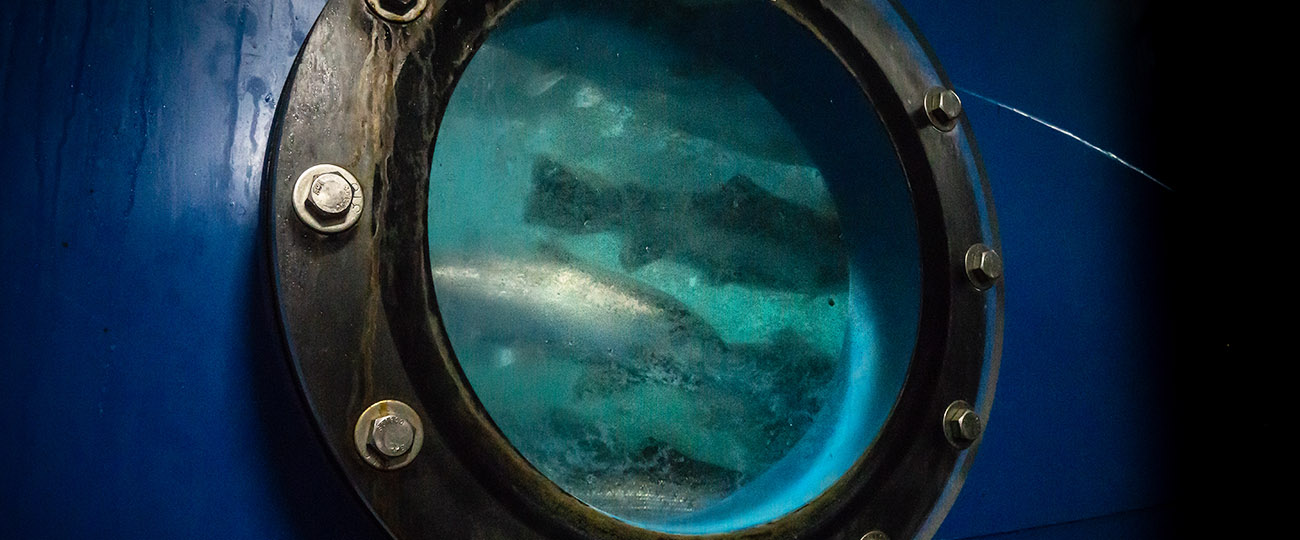
A porthole in one of the mature fish tanks.
But we weren’t ready to rule out salmon farming.
It took some faith, but the deeper we got into the salmon farming world, the better the prospects looked. And that’s largely because of a little something called a recirculating aquaculture system (or RAS, for short). This alternative fish farming system is fully contained and recirculates >90% of the water it uses. Kinda huge. Bigger than that, a land-based, closed system like RAS does a lot to mitigate the environmental concerns of ocean fish farming. Think collection and treatment of waste, tight control over water quality, and no meddling with the marine ecosystem.
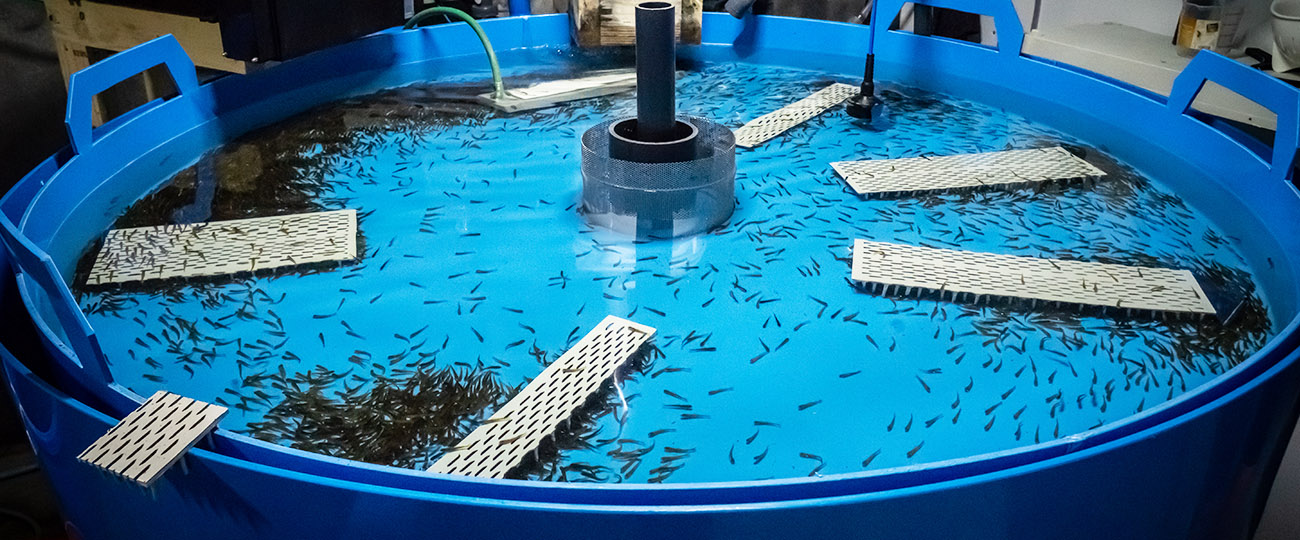
Young salmon in the nursery tank.
And then came Sustainable Blue.
Lo and behold, after some digging we discovered an Ocean Wise certified, RAS salmon farming operation right here in eastern Canada - the only one in the country, actually. And for that, we owe a big one to Kirk Havercroft, founder, owner, and operator of Sustainable Blue. A man on a mission, Kirk made his way from the UK to Canada, determined to spread the RAS gospel. Based in Centre Burlington, Nova Scotia, he started raising sea bass and then sea bream, both with mediocre success. In 2013, he attempted Atlantic salmon, the company’s bread n’ butter. And Kirk’s team is stellar - all eight employees are hardwired for transparency and integrity (even Kirk still takes his turn on night shifts!). In terms of recirculating water, a whole water tank - 99.9% of it - is filtered and recycled each hour. The proof is in the unbelievably clear water which moves waste out swiftly. On top of it all, Sustainable Blue uses completely organic fish feed (aka “skretting” in case you’re a fellow fish nerd) made without antibiotics or added colorants.
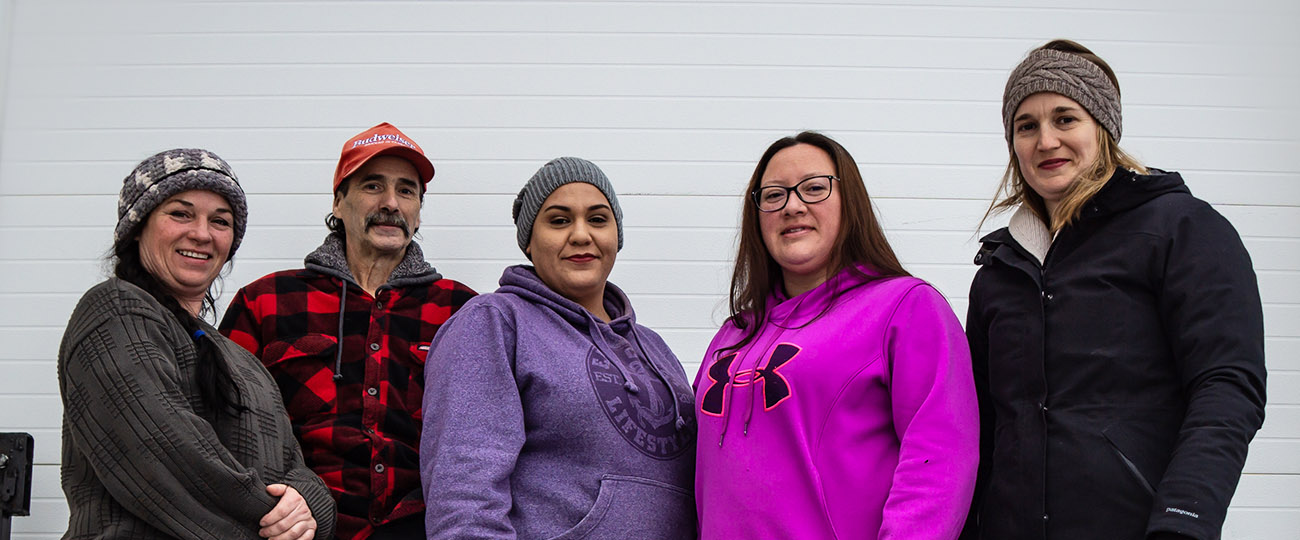
From left to right, Nikki Cooke (Processing Plant Supervisor), Rob Wright (Fish Processor), Samantha Gloade (Fish Processor), Wendy Bernard (Fish Processor), Hana Nelson (fishmonger and owner) from the Afishionado team. And thanks to Mikaila Bickford - Afishionado team member and resident photographer - for the photos.
Afishionado takes care of the rest.
After 6:00 a.m. harvest at Sustainable Blue, the salmon heads to Truro (about an hour’s drive), straight into the hands of Hana Nelson - owner, fishmonger, trailblazing entrepreneur - and Afishionado’s eight “afishionistas,” the majority all of whom are women. At 11:00 a.m., the packing and prep work starts. The process repeats, fueled by a vision both Hana and Kirk share: transparent and sustainable seafood. Sent out Wednesday and arriving Friday, what we get is fresh-frozen, responsible Atlantic salmon - every week.
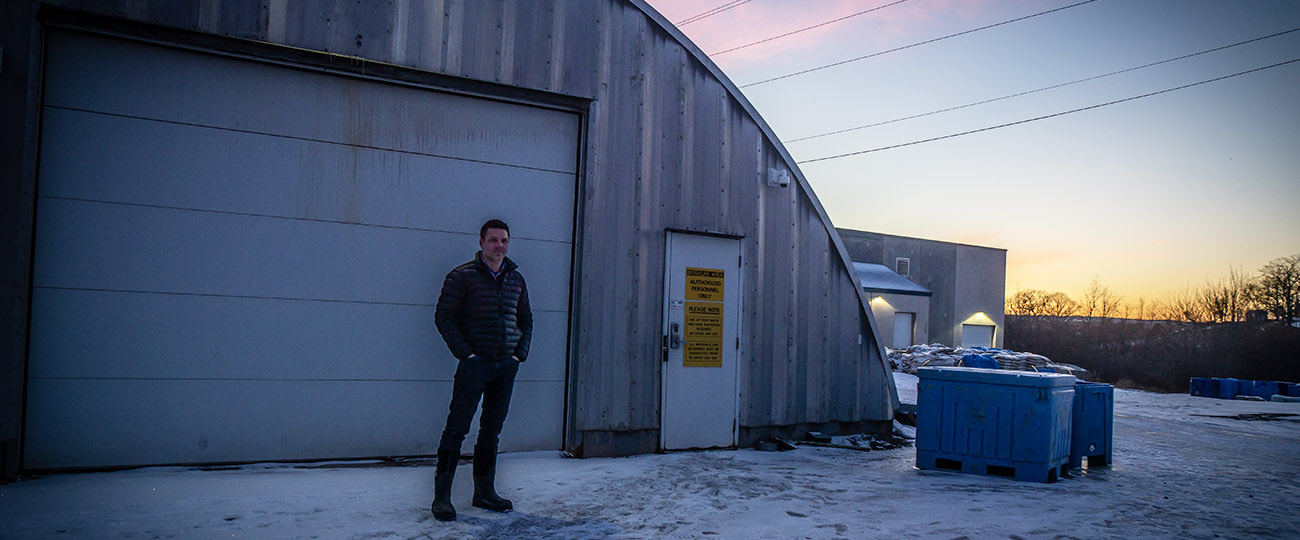
Sustainable Blue in Centre Burlington, Nova Scotia with owner Kirk.
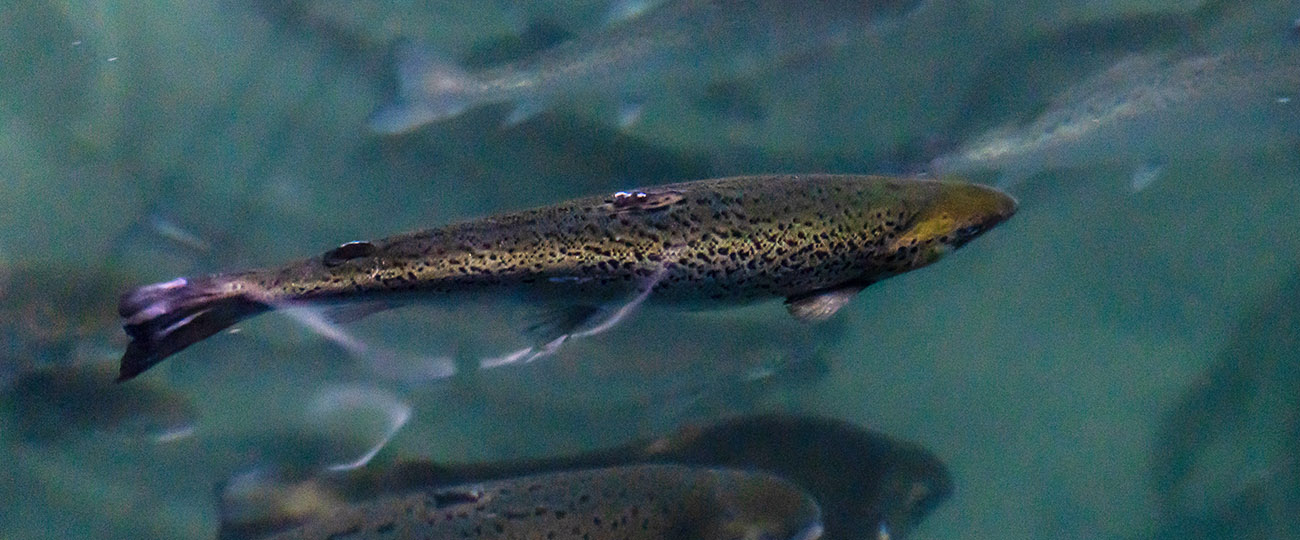
A few of the growing salmon in their tanks.
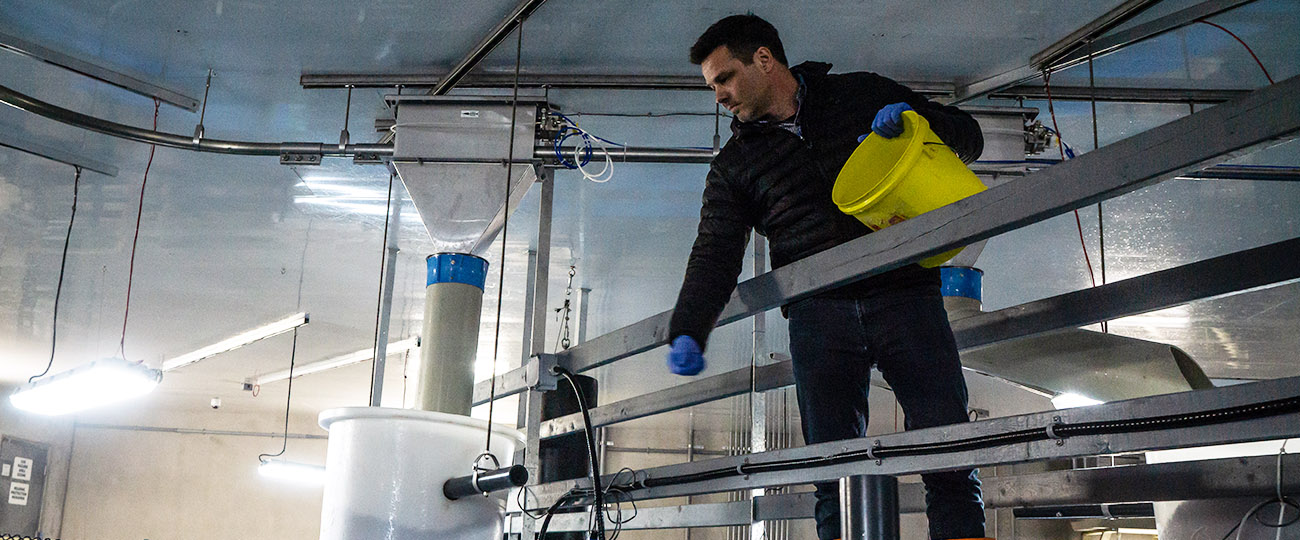
Kirk doing his daily rounds.
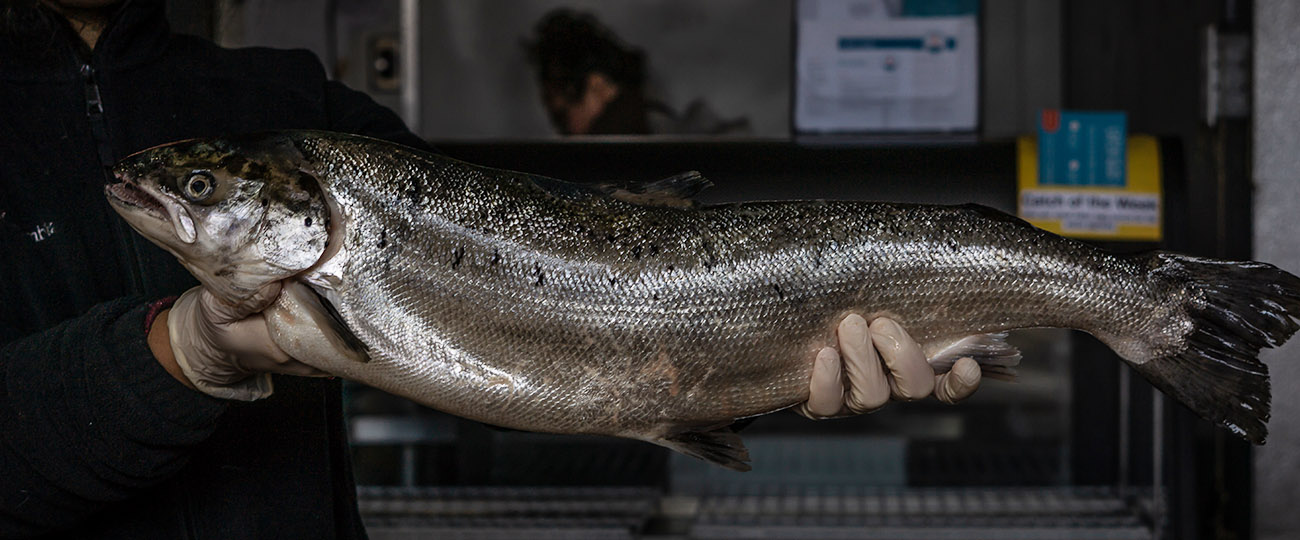
A salmon that has arrived at Afishionado.